
Vinyl Wrap vs. Paint Job: Cost, Longevity, and Which Is Right for Your Vehicle
Vinyl Wrap vs. Paint Job: Cost, Longevity, and Which Is Right for Your Vehicle

You want to change the way your vehicle looks. Maybe you're tired of the factory color, you bought a used car in a shade you don't love, or you want a finish the manufacturer never offered. The two real options are a vinyl wrap or a full repaint — and the right answer depends on what you're actually trying to accomplish.
This guide walks through the honest comparison. Cost, longevity, customization, resale impact, maintenance, and the use cases where each one wins. We do wraps for a living, but the goal here isn't to talk you into one — it's to help you make the decision that's right for your vehicle, your budget, and how long you plan to keep the car.
The Short Answer
If you want a finish that's expected to last 15+ years, perfectly matched, and indistinguishable from factory paint, a high-quality repaint is the right answer.
If you want a way to change your vehicle's color or finish for a fraction of the cost, with the option to revert to factory paint when you sell, and access to finishes (matte, satin, chrome, color-shift, brushed metal) that paint can't easily replicate — a wrap is the right answer.
For most owners who plan to keep a vehicle five to seven years, a wrap is the smarter investment. For lifetime keepers and full restorations, paint is hard to beat. The rest of this post explains why.
Cost: What You'll Actually Pay
Cost is usually the first question, and the gap between the two is significant.
A quality vinyl wrap on a typical sedan, SUV, or truck runs $2,500 to $6,000 depending on vehicle size, vinyl choice, and the complexity of the install. Color-change wraps in standard gloss, matte, or satin finishes are at the lower end. Specialty films like chrome, color-shift, brushed metal, or carbon fiber sit higher. Wrapping a larger vehicle like a Sprinter or full-size SUV pushes the upper end.
A quality repaint, done correctly, is a different conversation. A true high-end repaint — full disassembly, jambs, door shuts, engine bay, multi-stage prep, base/clear with proper materials — runs $8,000 to $20,000+. A "production" or budget paint job runs $1,500 to $5,000, but those typically skip jambs, leave overspray, and don't hold up. The cheap-paint shops you see advertising $999 paint jobs are not comparable to factory or wrap quality, and the result almost always shows it within a year or two.
The honest range comparison: a quality wrap costs roughly one-third to one-half of a quality repaint for comparable visual impact. That cost gap is the single biggest reason most enthusiasts and daily drivers go the wrap route.
Longevity: How Long Each One Lasts
Paint wins this category, but maybe not by as much as people assume.
A factory or quality aftermarket repaint, properly maintained, can last 15 to 20+ years before showing meaningful wear. That's the upside.
A premium vinyl wrap from 3M, Avery Dennison, or KPMF lasts five to seven years on average. Garaged vehicles or wraps protected from full-day sun can hit the longer end of that range. Vehicles parked outside year-round in Colorado's high-altitude UV typically see closer to four or five years before the vinyl shows fade or edge lift.
The catch is that paint isn't immune to time either. Colorado is brutal on paint. The same UV that fades wraps fades clear coat, and once clear coat fails, you're looking at oxidation, peeling, and a repaint anyway. Factory paint on a vehicle parked outside in metro Denver typically starts showing meaningful clear coat issues in the 10-to-15-year range — sometimes much sooner on horizontal surfaces. So while paint is the longer-lived option in absolute terms, it's not infinite, and the gap shrinks the more sun exposure the vehicle gets.
Customization: Where Wraps Win Big
This is where wraps pull ahead by a wide margin, and it's the reason a lot of people who could afford a repaint still choose vinyl.
Wraps come in finishes that paint simply can't replicate easily or affordably. Matte, satin, gloss, chrome, color-shift (where the color changes based on viewing angle), brushed metal, carbon fiber texture, and stealth finishes are all standard wrap options. Replicating any of these in paint requires specialty materials, exotic spray techniques, and pricing that often exceeds even wrap-finish premiums.
Wraps also allow for graphics, multi-color designs, racing stripes, complex commercial branding, and partial color changes that would be enormously expensive to paint. A two-tone or accent design that takes a few extra hours to wrap might add days of masking and labor to a paint job.
If you have a specific factory color from another vehicle that you want — say a Porsche shade on a BMW, or an exotic color on a daily driver — both options can deliver it, but the wrap will be cheaper and reversible.
For anyone who wants something other than a basic gloss color change, wraps are the answer.
Installation Time and Downtime
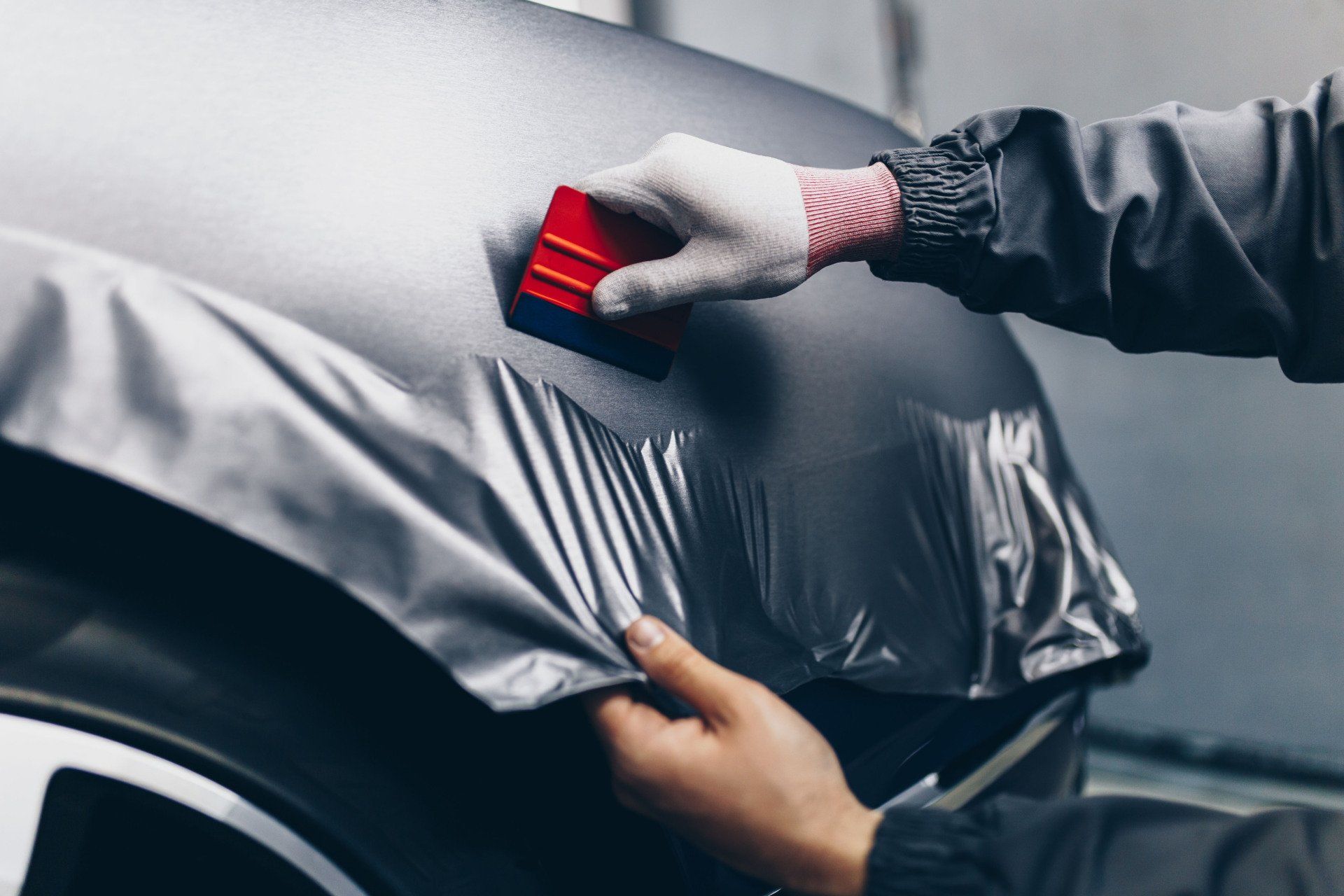
A professional wrap install on a typical vehicle takes two to four days from drop-off to pickup. That includes prep, install, and final inspection. The vehicle leaves the shop ready to drive immediately.
A quality repaint takes one to three weeks, sometimes longer for show-quality work. The vehicle is fully disassembled, prepped, sprayed, cured, and reassembled — all of which takes time. Then there's the cure period for the paint itself, during which you have to be careful with washing and waxing.
For people who can't be without their vehicle for an extended period, the wrap timeline is a meaningful advantage.
Reversibility: The Wrap's Hidden Superpower
This is the factor most people don't think about until they're a few years into ownership, and it's the biggest practical advantage wraps have over paint.
A quality wrap, properly installed and removed within its expected life, comes off cleanly and reveals the original factory paint underneath — fully intact and protected from years of UV, light scratches, and minor abrasions. Many wrapped vehicles actually have better paint underneath at removal than they would have if they'd never been wrapped.
A repaint is permanent. If you change your mind, want a different color, or decide a few years in that you preferred the original look, you're getting another paint job.
This matters more than people realize. The owner who wraps their car satin black in 2026, drives it for four years, and then sells it in 2030 — that owner removes the wrap and sells a vehicle with original factory paint and full original paint records. The owner who paints their car satin black in 2026 has permanently altered the vehicle, and the paint records and resale narrative are different forever.
For leased vehicles, this is a hard requirement. Wraps are commonly used on leased cars precisely because they remove cleanly at lease end. A repaint on a leased vehicle is a bad idea for obvious reasons.
Resale Value: An Underrated Difference
Resale impact follows directly from reversibility.
Wrapped vehicles with original paint underneath generally sell at or near comparable unwrapped market values. Buyers see a car with factory paint that's been protected for years. Some buyers actively prefer wrapped vehicles for exactly this reason.
Repainted vehicles get more complicated. A factory color repainted to the same factory color, done at OEM-quality, can sell normally — but buyers will scrutinize the work and any panel matching. A repainted vehicle in a non-factory color sells in a smaller market and usually for less. Repaint quality is also a concern: a high-end repaint holds value reasonably well, but a budget repaint can actively reduce a vehicle's resale value because buyers assume there's body damage being hidden.
For anyone who plans to sell or trade the vehicle within a decade, the wrap route is almost always better for resale outcomes.
Maintenance: What Each One Demands
Day-to-day maintenance differs in a few practical ways.
Wraps prefer hand washing. Touchless car washes are fine. Brush-style automatic washes should be avoided because the brushes can lift edges and degrade the vinyl over time. Pressure washing is fine if the spray is held back from edges and seams. Wraps don't get waxed in the traditional sense, though there are wrap-safe sealants that add gloss and UV protection.
Paint can take more abuse in the maintenance department. Automatic car washes are technically safe, though the brushes will scratch clear coat over time. Wax and ceramic coating are common protective additions. Paint correction can address swirls, scratches, and oxidation as they accumulate.
Both finishes benefit from being parked in a garage or covered when possible — that's the single biggest factor in extending the life of either one in Colorado.
Damage Repair: A Real Difference
This is where the practical math sometimes shifts back toward paint.
If you scratch or damage a wrapped panel, the panel can usually be re-wrapped. If the wrap is more than a year or two old, the new panel may not perfectly color-match the rest of the vehicle because vinyl batches vary slightly and aging affects color subtly. For minor damage, this is rarely a problem. For significant damage, it can mean re-wrapping more than just the damaged panel to maintain consistency.
If you scratch or damage a painted panel, the panel can be repaired and repainted using factory paint codes, and a quality body shop can blend the repair into adjacent panels almost invisibly. The paint code is permanent and reproducible. Bodywork on a painted vehicle is a more familiar process for most repair shops.
For drivers who frequently see minor damage — parking lot dings, scrapes, etc. — paint may be slightly easier to live with long-term, though the cost-to-fix differential is rarely large enough to override the other factors.
Colorado-Specific Considerations
A few things specific to Colorado that affect this decision.
UV is severe at altitude. Both paint and wraps fade faster here than at sea level. Premium vinyl with UV-resistant laminate and quality clear coat with proper care both perform well, but cheap versions of either fail quickly.
Hail is real. Neither wraps nor paint stops hail damage. If hail protection is a concern, a wrap actually offers a tiny bit more cushion than bare paint, but the realistic answer is parking under cover during storms or carrying the right insurance.
Magnesium chloride. Winter highway brine is hard on every finish. Paint protected with quality wax or ceramic coating handles it fine. Wraps handle it fine if cleaned regularly. Letting either sit dirty all winter accelerates wear.
Mountain driving means rocks. Both paint and wrap can chip from rock impacts. Neither one is ideal protection against gravel and debris from forest service roads or I-70 in winter. This is where paint protection film (PPF) comes in — and PPF can be applied over either paint or a wrap to protect the leading surfaces.
When Each Option Wins
Choose a wrap if:
- You plan to keep the vehicle five to seven years or less
- You want a finish paint can't easily replicate (matte, satin, chrome, color-shift)
- You're leasing
- You want to preserve factory paint and resale value
- Your budget is in the $2,500–$6,000 range
- You want minimal downtime
- You might want to change the color again in the future
Choose paint if:
- You're keeping the vehicle long-term (10+ years)
- You want a permanent, factory-quality color change
- You're doing a full restoration where everything is being redone
- You have the budget for a true high-end repaint
- The vehicle has paint damage that's going to require bodywork anyway
- You want a finish that's identical to factory in every way
For about 80% of the daily drivers, enthusiast vehicles, and customization projects we see come through, the wrap is the right call. For the other 20% — the lifetime keepers, the restorations, the show cars — paint earns its place.
Frequently Asked Questions
Will a wrap damage my factory paint? On vehicles with sound factory paint, no. Wraps actually protect the paint from UV, scratches, and minor abrasions during the wrap's life. The exception is vehicles with already-failing paint — peeling clear coat, active rust, or repainted panels with adhesion issues — which can be damaged at wrap removal.
How long can a wrap stay on before removal becomes a problem? Quality wraps remove cleanly within their warrantied life (typically five to seven years). Wraps left on past 8-10 years, especially on vehicles parked in full sun, can become harder to remove and may leave adhesive residue. The cleanest removals happen within the wrap's expected lifespan.
Can I wrap a vehicle that's already been repainted? Usually yes, if the repaint is sound and fully cured. Most quality aftermarket repaints accept wraps fine after the paint has cured (typically 60-90 days post-paint). If the repaint has adhesion issues or hasn't fully cured, wrapping over it can cause problems at removal.
Is a partial wrap a good middle option? Sometimes. Partial wraps work well for accents, stripes, hood blackouts, roof contrasts, and specific design elements. For a full color change, partial wraps usually look unfinished and aren't a true alternative to either a full wrap or a repaint.
Does a wrap protect against rock chips? Some, but not as much as paint protection film (PPF). Vinyl wraps are thinner than PPF and aren't designed primarily for impact protection. For rock chip protection, PPF on the front-end leading surfaces is the right answer — and it can be applied over either paint or a wrap.
How do I know if a wrap shop is good? Look at recent work in person if possible. Look at edges, seams, door jambs, mirrors, and tight curves. A well-installed wrap has tight, clean edges, no visible seams in the middle of panels, no bubbles, and no lifted corners. Cheap installs cut corners (sometimes literally) on the parts customers don't immediately see, but that's where wraps fail first.
Making the Call on Your Vehicle
The wrap-vs-paint decision usually comes down to three questions: How long are you keeping the vehicle, what kind of finish do you actually want, and what's the budget? Answer those honestly and the right answer becomes clear.
If you're still unsure, send us photos of your vehicle, tell us the look you're going for, and we'll give you a straight answer about whether a wrap makes sense — and we'll tell you when it doesn't. We've turned away wrap projects when paint was the better answer for the customer, and we've helped customers save thousands by going with a wrap instead of a repaint they didn't actually need.
We work with drivers across Denver, Commerce City, Thornton, Aurora, Westminster, and the rest of the Front Range on color changes, custom finishes, accent wraps, and full builds. Reach out for a free quote and a real conversation about what's right for your vehicle.