


The Complete Guide to Commercial Fleet Wraps for Denver Businesses
The Complete Guide to Commercial Fleet Wraps for Denver Businesses

If you run a business with vehicles on the road in metro Denver, you're already paying for one of the most valuable advertising assets you'll ever own — you just might not be using it. A wrapped service van, box truck, or pickup turns every job site visit, every supply run, and every drive across town into hundreds or thousands of brand impressions. And unlike monthly ad spend that disappears the moment you stop paying, a fleet wrap keeps working for years.
This guide covers everything Denver-area business owners need to know about fleet wraps: how they actually pay back, what they cost, what to expect from the process, and how to get the most out of every vehicle in your fleet.
Why Fleet Wraps Outperform Almost Every Other Ad Channel
The case for fleet wraps comes down to cost per impression. According to research from outdoor advertising studies, a single wrapped vehicle in a metro market generates somewhere between 30,000 and 70,000 daily impressions depending on routes, traffic patterns, and how much the vehicle is on the road. Over the five-to-seven-year life of a quality wrap, that adds up to tens of millions of impressions for a one-time install cost.
Compare that to almost any other advertising channel. Billboards in Denver run thousands of dollars per month per location. Google Ads in competitive trades cost $10 to $50+ per click. Direct mail, radio, and local TV all require continuous spend to generate continuous impressions. A fleet wrap, by contrast, has a fixed cost and an open-ended return.
It's also one of the few advertising channels people actually don't tune out. A clean, well-designed wrap on a service truck looks professional and signals competence — exactly the impression you want a potential customer to have when they see your van pulling into a neighbor's driveway.
For most Denver-area trades — HVAC, plumbing, electrical, landscaping, pest control, cleaning, mobile detailing, food trucks, contractors, and delivery — a wrapped fleet is the single highest-ROI marketing investment available.
What "Fleet Wrap" Actually Means
The term covers a wide range of options, and getting the right one depends on your goals, your budget, and the look you want.
A full wrap covers the entire vehicle, edge to edge, including bumpers, mirrors, and door handles. It allows for complete color changes, full-bleed graphics, and the most polished, branded appearance. Full wraps are ideal for businesses where the vehicle is part of the brand — service companies whose customers will see the truck up close at every job.
A partial wrap covers high-visibility areas — typically the rear quarter panels, doors, hood, or specific sections — while leaving the rest of the factory paint exposed. It's a more cost-effective way to get strong brand presence without the price of a full wrap. Partial wraps work well when the factory paint is white or another clean base color that complements the design.
Vinyl decals and lettering are the simplest option: cut graphics applied directly to the vehicle, usually featuring your logo, contact info, and a few key services. This is the lowest-cost route and works well for fleets that need basic identification without full branding.
Vehicle graphics packages sit between decals and partial wraps, typically combining lettering, logos, and accent graphics for a polished but budget-conscious look.
For most fleets, a mix makes sense: lead trucks and customer-facing vehicles get full wraps, while support vehicles get partial wraps or graphics packages.
Vehicle Types and What Works Best for Each
Every vehicle in a fleet is a different canvas, and getting the most out of each one means understanding what each platform is good for.
Cargo vans like the Ford Transit, Mercedes Sprinter, and Ram ProMaster are the holy grail of fleet wraps. They're rolling billboards with massive flat side panels and high road visibility. Service businesses get the most ROI from these vehicles because the side panels can carry full graphics, large logos, service lists, phone numbers, and websites without crowding.
Box trucks are even better for visibility — the box itself is essentially a billboard that's taller than most surrounding traffic. Beverage distributors, moving companies, and large service operations get exceptional visibility from wrapped box trucks.
Pickup trucks are common in trades like construction, landscaping, and HVAC. They have less flat surface area than vans, so design matters more. Tailgate graphics, door logos, and bedside callouts are the high-impact zones.
Sedans, SUVs, and crossovers are common for sales reps, real estate agents, and mobile services. Compact wraps and graphics packages make these vehicles look professional without the cost of a full van wrap.
Trailers are sometimes overlooked but are excellent advertising real estate, especially the large flat sides of enclosed trailers. Landscaping companies, food trucks, mobile businesses, and trade contractors should always consider wrapping their trailers along with the truck pulling them.
The Real ROI: What to Expect from a Fleet Wrap Investment
Costs vary based on vehicle size, design complexity, vinyl quality, and how much surface area is being covered. As a general guide for the Denver market:
A full wrap on a cargo van typically runs $3,500 to $5,500 depending on vehicle and design complexity. A full wrap on a box truck runs $4,500 to $7,500+. Pickup trucks fall in the $2,500 to $4,500 range for full wraps. Partial wraps and graphics packages run anywhere from $800 to $2,500. Simple lettering and decals start around $300 to $800.
Now compare that to what other marketing channels cost over the five-to-seven-year life of the wrap. A single billboard in metro Denver runs $2,000 to $8,000+ per month. Five years of one billboard is $120,000+. A modest Google Ads spend of $1,500/month over five years is $90,000. A wrapped van that costs $4,500 once and generates impressions for five years works out to roughly $75 per month — and the impressions happen exactly where your customers and prospects actually live and drive.
Tracking the return is also straightforward. The single most effective trick is using a unique phone number on the wrap, or a dedicated landing page URL, so calls and visits from the wrap are measurable. Many of our clients see the wrap pay for itself in the first six months from new customer calls alone.
Design Considerations That Make or Break a Wrap
A wrap is only as effective as its design. The most expensive vinyl in the world looks bad on a poorly designed truck, and a brilliantly designed wrap on quality vinyl will outwork your entire marketing budget.
The most important design rule is the three-second test. A driver passing your vehicle on I-25 has about three seconds to read the wrap. That means the design needs three things to be immediately scannable: what you do, who you are, and how to reach you. Companies that try to cram every service, every certification, every social handle, and a five-paragraph value proposition onto the side of a van end up with a wrap nobody can read.
Phone numbers and websites should be the largest text elements after the logo. They should be readable from at least 50 feet away. Contact info that requires squinting is contact info that doesn't get used.
Color and contrast matter more than people think. High-contrast designs (dark text on light backgrounds, or vice versa) read instantly. Subtle color combinations might look beautiful in a mockup on screen and disappear completely on the highway.
Brand consistency across the fleet is non-negotiable for any business with more than a couple vehicles. Every truck should look like it came from the same company, with the same logo placement, color scheme, and style. Mismatched fleet branding signals an unprofessional operation and undermines the trust the wraps are supposed to build.
A good wrap shop handles all of this for you. We work with our fleet clients on design from the ground up, ensuring the artwork is built for vehicle production (not just print), the colors are color-matched across vehicles, and the design is going to read clearly at highway speed.
Materials, Longevity, and What to Look For
Not all wraps are created equal, and the difference between a premium wrap and a budget wrap shows up quickly in Colorado's climate.
The two manufacturers that dominate the premium fleet market are 3M and Avery Dennison. Their cast vinyl films — 3M IJ180 and Avery MPI 1105 are the industry standards — are designed for long-term outdoor durability, conformability around curves, and clean removal at end of life. These films carry manufacturer warranties of five to seven years against fading, cracking, and adhesive failure.
Cheaper calendered vinyl films exist and cost less upfront, but they shrink, crack, and fade faster — especially in Colorado's high-altitude UV and temperature swings. For a fleet that's going to be on the road for years, premium cast vinyl is always the right call. The labor cost to install the wrap is the same either way, and the difference between a wrap that lasts seven years and one that fails in two is enormous.
A laminate top layer is also critical. Laminate adds UV protection, scratch resistance, and gloss (or matte, if that's the look). Quality fleet installers laminate every printed wrap as a matter of course. If a quote doesn't include lamination, that's a red flag.
What the Fleet Wrap Process Actually Looks Like
For a business owner planning a fleet rollout, here's what to expect from a professional shop.
The process starts with a discovery conversation: how many vehicles, what types, what your brand looks like, and what your goals are. From there, we develop design concepts and mockups specific to your vehicles. Most clients go through one or two rounds of revisions before approving final artwork.
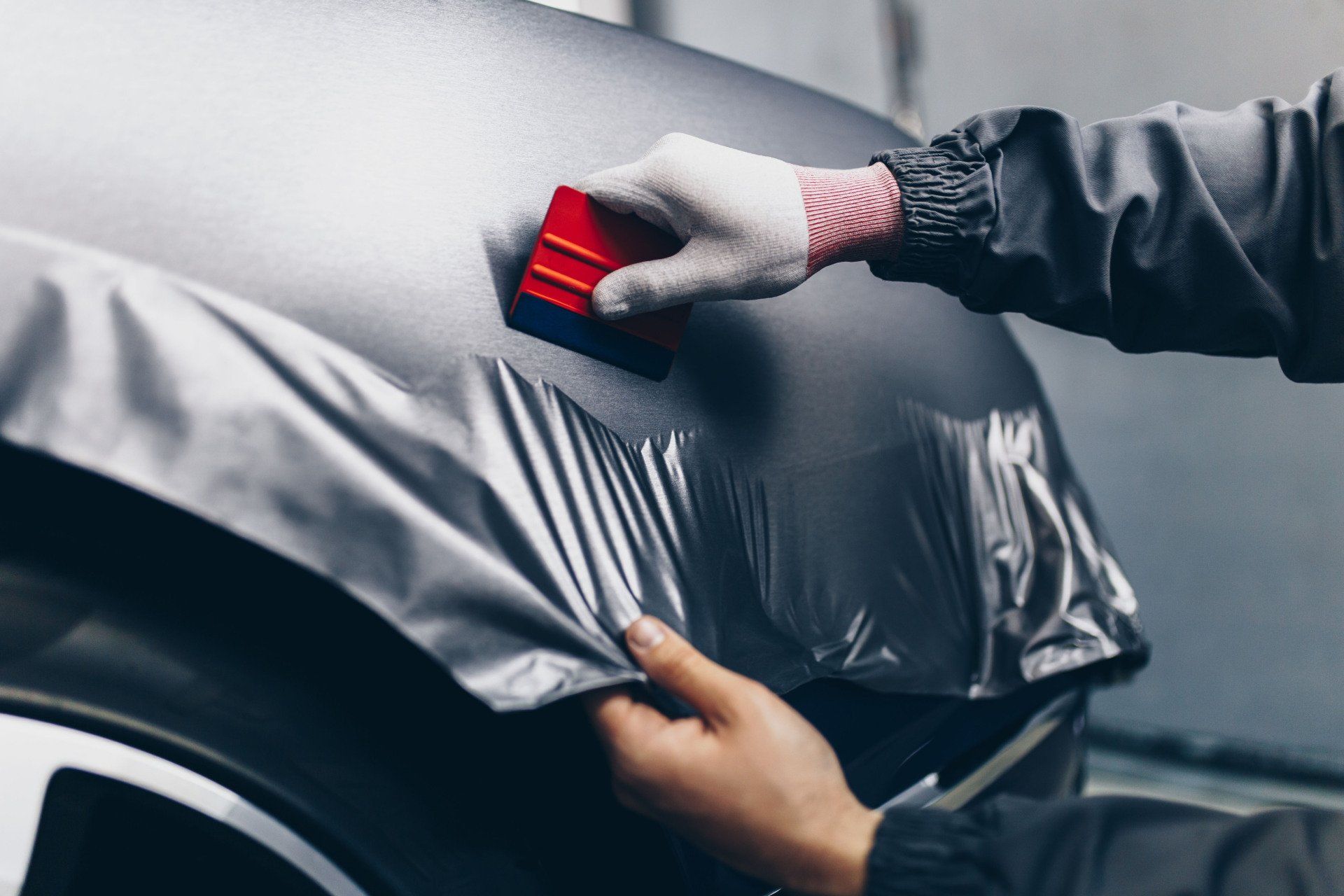
Once the design is approved, we schedule production. A single van wrap typically takes one to two days of installation time. A larger fleet rollout is usually staggered — we'll bring in two or three vehicles at a time over a few weeks so the business isn't ever fully out of operation. Many clients schedule installs for slower seasons or rotate vehicles through over a month.
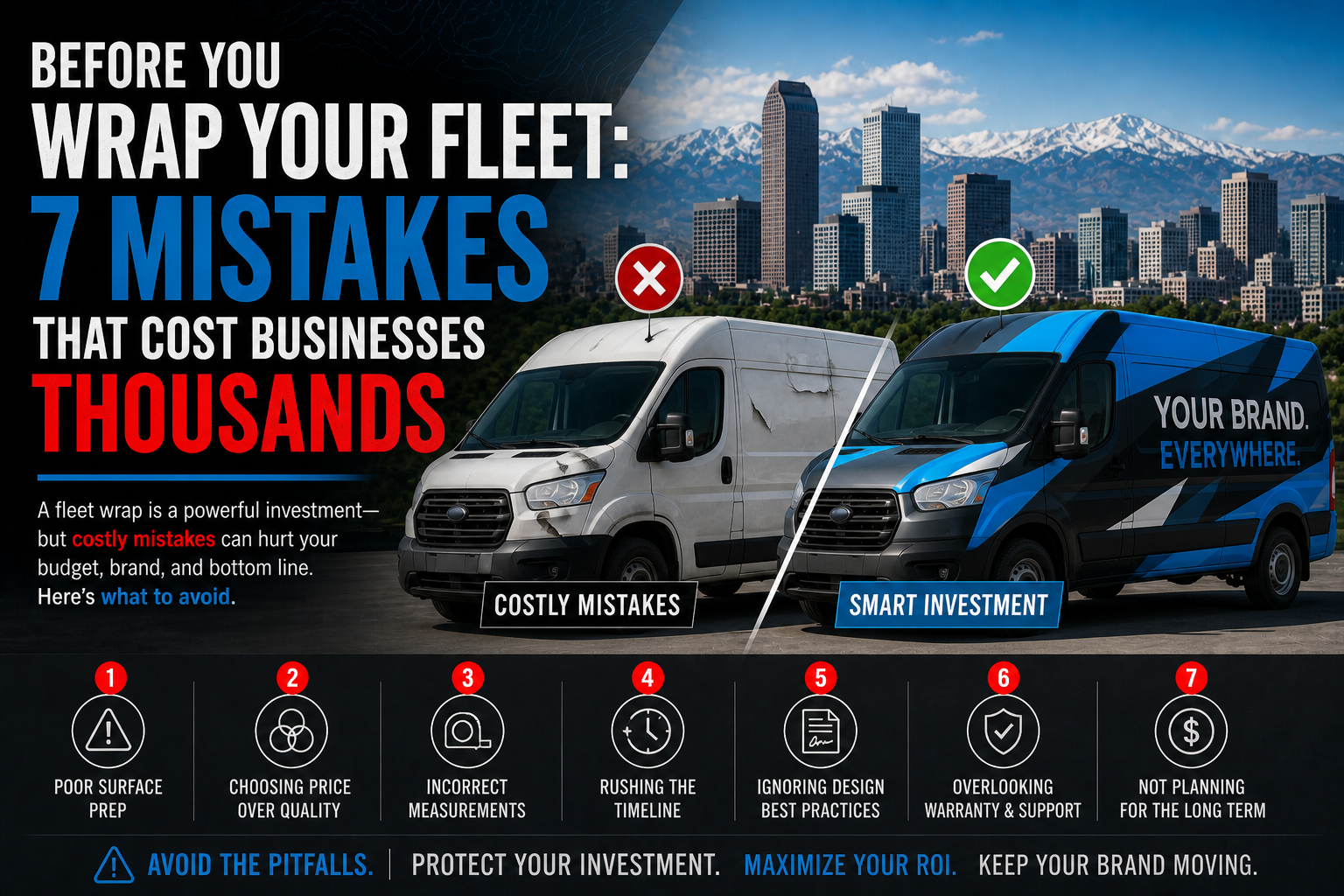
Before installation, every vehicle gets a thorough surface prep — washing, decontamination, panel cleaning, and removal of any existing graphics. Wraps adhere to clean, smooth, undamaged paint, so prep is critical. Vehicles with serious paint damage, rust, or peeling clear coat need to be addressed before wrap install.
After installation, we provide a care guide and warranty documentation. Most premium fleet wraps come with a manufacturer warranty plus our installation warranty.
Maintaining a Wrapped Fleet
Wraps are durable, but they last longer with basic care. Hand washing is preferred. Touchless car washes are acceptable. Brush-style automatic car washes should be avoided — the brushes can lift edges and degrade the vinyl over time. Pressure washing is fine if the spray is held back at least a foot from edges and seams.
Bug splatter, tar, sap, and bird droppings should be cleaned off promptly because they can stain or etch the vinyl if left for weeks. Standard automotive cleaners are safe for most wraps, though it's worth confirming with your shop before applying anything aggressive.
Garaged vehicles or those parked in shade hold up significantly longer than vehicles parked in direct sun all day. For fleets parked outside year-round, expect the wrap to perform well for the warrantied period and start showing some fade in the year or two after.
Tax Considerations Worth Knowing
We're not accountants, and your CPA should always make the final call, but it's worth knowing that fleet wraps are typically classified as advertising expenses for tax purposes — meaning the cost is generally deductible in the year incurred. This is different from a vehicle improvement, which would have to be depreciated over time. Many of our fleet clients write off their wrap costs the same year as a regular marketing expense. Bring it up with your tax professional when budgeting.
When to Refresh, Update, or Replace
Fleet wraps don't last forever, and there's a right time to refresh. The five-to-seven-year window is typical for full replacement, but there are other reasons to update sooner: a brand refresh, a phone number or website change, an expansion into new services, or simple wear in high-touch areas.
A good practice for growing fleets is updating on a vehicle-by-vehicle basis as new vehicles enter service. Every new truck gets the current wrap design, and older trucks get refreshed when their wraps reach end of life. This keeps the fleet looking consistent even as the brand evolves.
When a wrap reaches end of life, professional removal is straightforward — quality vinyl comes off cleanly without damaging the factory paint, which is one of the major advantages of wraps over painted-on graphics. The original paint is preserved, the vehicle's resale value is intact, and a new wrap can be applied immediately.
Frequently Asked Questions
How long does a fleet wrap last in Colorado? Quality cast vinyl wraps from 3M or Avery Dennison typically last five to seven years in Colorado conditions. Garaged vehicles can hit the longer end; vehicles parked outside in full sun year-round may see closer to four or five years before showing meaningful fade.
Can a wrap be removed without damaging the vehicle? Yes. Quality wraps are designed for clean removal. The original paint underneath is preserved, which is actually a benefit for fleet vehicles — the vehicles often have better resale value than unwrapped equivalents because the paint is protected during the wrap's life.
Will a wrap damage my factory paint? On vehicles with sound factory paint, no. Wraps actually protect the paint from UV, scratches, and minor abrasions. The exception is vehicles with paint that's already failing — peeling clear coat or active rust — which need to be addressed first.
How quickly can a fleet be wrapped? A single vehicle takes one to two days. A fleet of ten can be staggered over two to four weeks depending on scheduling. We work with most clients to minimize downtime and keep operations running.
Do you handle the design, or do I need to bring artwork? Both options work. We have in-house designers who work on fleet projects from concept to install. If you have an existing brand identity and creative team, we work directly with their files and ensure they're production-ready for vehicle application.
What if I add new vehicles to my fleet later? We keep your design files on record and can wrap new fleet additions in matching graphics whenever you need them. Most fleet clients add one or two vehicles a year, and we make that process simple.
Is partial wrapping worth it, or should I just go full? It depends on the vehicle and the goal. For a white or light-colored vehicle where the factory paint complements the brand, a well-designed partial wrap can look excellent at a much lower cost. For dark or oddly colored vehicles, or for high-visibility lead vehicles, full wraps are usually the better investment.
Build a Fleet That Works as Hard as You Do
A wrapped fleet is one of the few marketing investments that pays back for years on a single install — and one of the few that turns the work you're already doing into thousands of daily impressions. For Denver-area businesses competing in crowded trades, a professionally designed and installed fleet wrap is the difference between blending into traffic and being the company everyone in the neighborhood recognizes.
We've wrapped fleets for HVAC companies, contractors, landscapers, plumbers, food trucks, distributors, and everything in between across Commerce City, Thornton, Aurora, Westminster, Denver, and the broader Front Range. We handle design, production, installation, and ongoing fleet additions, and we stand behind every wrap we install.
Reach out for a fleet consultation. Tell us how many vehicles you have, what you do, and what you want your fleet to say about your business. We'll put together a proposal with vehicle-by-vehicle pricing, design concepts, and a timeline that fits your operations — and you'll start turning every drive into measurable marketing.